
Live Rugby League Betting: In-Play NRL & Super League Strategies

 Available in US
Live betting has revolutionized how punters engage with rugby league matches. Where traditional wagering required committing to positions before kickoff with no ability to adjust, in-play markets allow bettors to respond to actual game developments in real time. A team that looked vulnerable on paper might dominate early and present entirely different betting value at halftime than they did pregame. This dynamic environment rewards those who understand both rugby league fundamentals and the unique mechanics of live betting markets.
The appeal of in-play wagering extends beyond simple flexibility. Live betting creates opportunities that pre-match markets cannot offer because bookmakers must price events as they unfold rather than with days of preparation. When a key player suffers an early injury, live odds adjust but often lag behind the true impact on match probabilities. When one team establishes unexpected dominance, the market overcorrects, offering value on the opposition at inflated prices. These inefficiencies exist because pricing matches in motion is inherently harder than pricing them at rest.
Rugby league’s structure makes it particularly suitable for live betting compared to many other sports. The six-tackle possession system creates predictable patterns of territory exchange that experienced observers can anticipate. Momentum swings occur frequently but follow recognizable patterns tied to field position, completion rates, and penalty counts. The relatively high scoring compared to sports like soccer means that matches rarely become foregone conclusions, maintaining betting interest and market liquidity through most contests. Even substantial halftime leads regularly evaporate in rugby league, keeping every market alive.
This guide will teach you how to profit from live rugby league betting across both NRL and Super League competitions. You will learn the mechanical aspects of how in-play markets function, which live betting opportunities offer genuine value, and how to read matches in ways that translate into profitable wagering decisions. Whether you currently focus on pre-match betting or have experience with live markets in other sports, these strategies will sharpen your approach to real-time rugby league wagering.
How Live Rugby League Betting Works
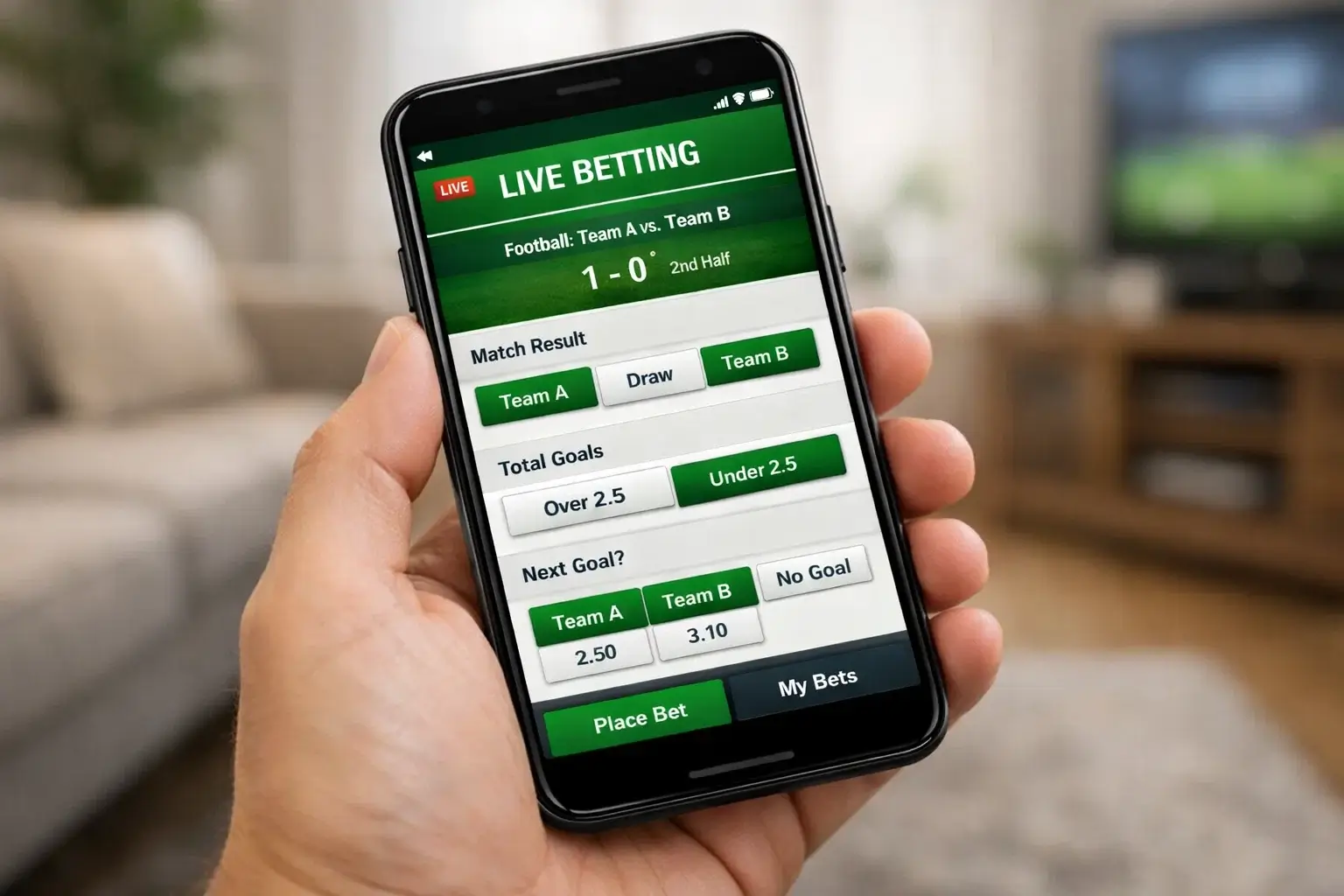
Real-time odds movement during live rugby league betting follows patterns that reflect both actual game events and anticipated future developments. When a team scores a try, their match winner odds shorten immediately to reflect the improved scoreboard position. However, the adjustment often overshoots or undershoots the true probability change depending on game context. A try scored against the run of play might move odds more than it should because the market reacts to the event without weighing the underlying dominance that suggests regression. Understanding when market movements are appropriate versus when they present opportunity separates profitable live bettors from those who simply chase results.
Suspension triggers pause betting on specific markets during critical game moments. When a potential try-scoring play develops, bookmakers suspend the match winner and related markets to prevent bettors from betting on outcomes that are essentially determined. These suspensions typically last ten to thirty seconds while the situation resolves, then markets reopen at adjusted prices. The frequency of suspensions varies between bookmakers, with some operators maintaining more continuous betting while others suspend markets more liberally. Faster bookmakers offer advantages for sharp bettors who can identify value before suspensions trigger, while slower operators provide easier access but at less favorable prices.
Cash-out mechanics have become central to live betting strategy, allowing bettors to close positions before markets settle naturally. If you backed an underdog pre-match who now leads by ten points, cashing out locks in profit regardless of the final result. The cash-out offer represents the bookmaker’s calculation of your bet’s current value based on live odds, minus a margin for providing the early settlement option. This margin means you generally receive less than the mathematically fair value of your position, but the certainty often justifies the cost. Strategic cash-out usage can dramatically improve results by converting variance into locked profits at opportune moments.
The technical infrastructure supporting live betting creates practical considerations that affect strategy. Streaming delays mean that what you see on your screen happened several seconds ago, while the betting market reflects information from people closer to real-time action. This delay disadvantages remote bettors against those at venues or accessing faster feeds. Internet connection quality affects your ability to place bets during rapidly moving situations. Mobile betting platforms sometimes lag behind desktop versions in processing live wagers. Understanding these technical realities helps you identify situations where you have informational advantages versus those where faster operators will consistently beat you to the best prices.
Bookmaker live pricing algorithms differ significantly between operators, creating opportunities for those who maintain multiple accounts. Some bookmakers use sophisticated models that adjust prices efficiently based on expected outcomes, while others rely on cruder heuristics that create systematic mispricings. Comparing live odds across platforms during matches reveals which bookmakers offer the best prices in different situations. One operator might consistently offer superior live underdog prices while another provides better odds on favorites. Building this knowledge through observation allows you to direct each bet to the bookmaker offering the best value in that specific moment.
Best In-Play Markets for Rugby League
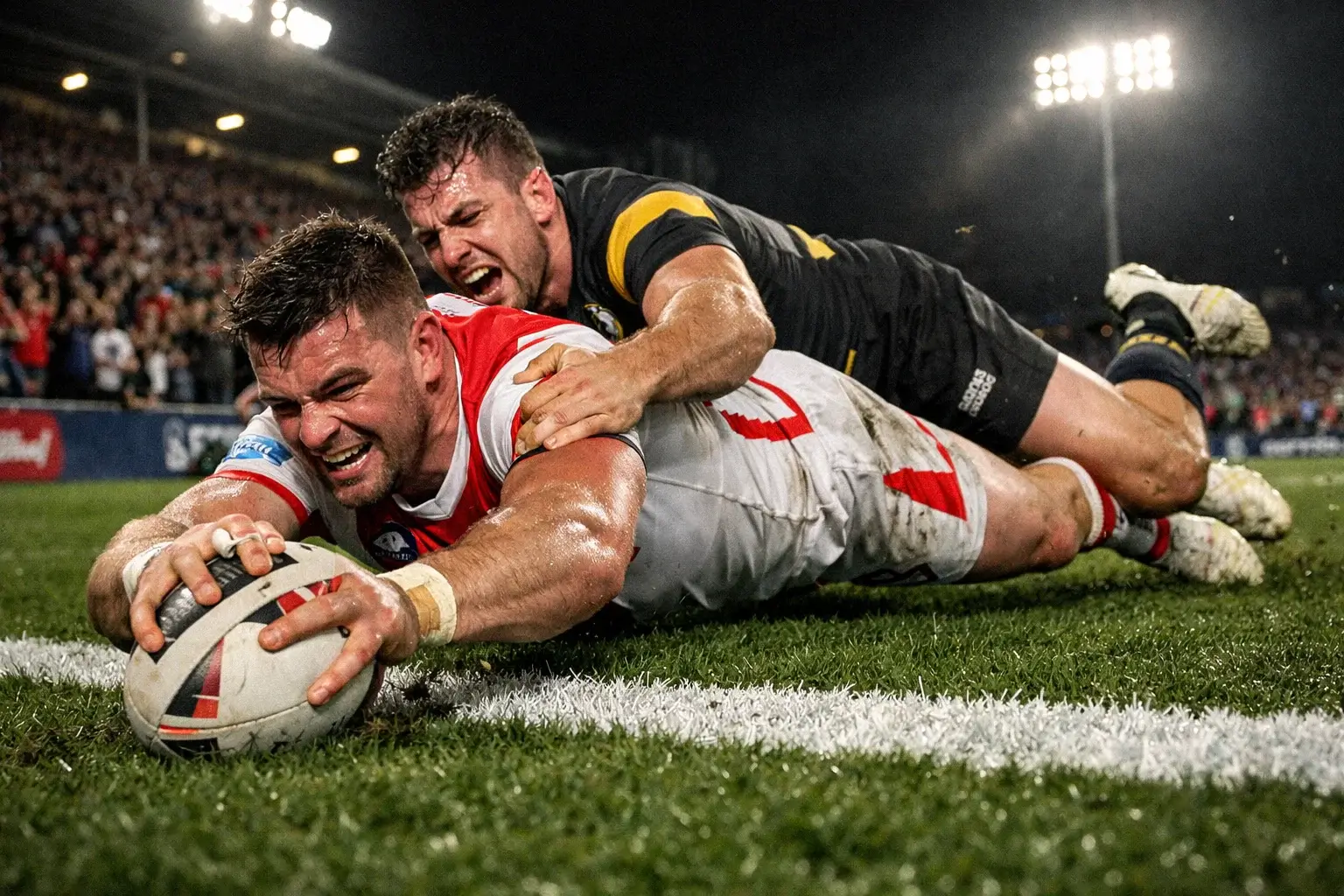
Match winner momentum bets represent the core live betting opportunity in rugby league. When a team falls behind early despite dominating possession and territory, their live odds extend beyond what the underlying performance justifies. Sharp live bettors recognize these situations and back the dominant team at improved prices, expecting their control to eventually translate into scoreboard success. Conversely, when a team builds a lead through fortunate bounces and against the run of play, their odds shorten too aggressively, creating value on the trailing opponent. Reading these momentum disconnects between score and performance separates profitable live bettors from those who simply react to what the scoreboard shows.
Next try scorer betting during matches offers value when specific game situations create predictable scoring patterns. When one team establishes sustained pressure near their opponent’s try line, the next try probability heavily favors their attacking players. Yet the live odds often fail to fully reflect this positional advantage, offering prices on defenders that would make sense at kickoff but not when the attacking team has camped inside the twenty. Similarly, when teams receive penalties in advantageous field position, the next try scorer odds should adjust based on the likely subsequent attacking set, but this adjustment often lags. Identifying these positional edges creates consistent live betting opportunities.
Live totals adjustments provide betting opportunities when early game patterns suggest different final scoring than pre-match expectations implied. If a match produces three tries in the first fifteen minutes despite an under total of thirty-eight points, that total now appears more likely to breach even if scoring slows subsequently. The live over line might have moved to forty-six, but the blistering early pace could justify even higher expectations. Conversely, two teams grinding through a scoreless opening quarter might see their live total drop from forty to thirty-two, yet defensive fatigue could still produce second-half scoring that exceeds even the original total. Reading scoring pace and projecting appropriately creates totals value throughout matches.
Next scoring play markets offer quick-resolution betting opportunities that suit certain temperaments and strategies. Rather than waiting eighty minutes for match winner bets to resolve, you can bet on whether the next points come from a try, penalty goal, or field goal. These markets reset after each scoring play, providing continuous betting action throughout matches. The value in next scoring play betting comes from reading game situations that favor particular outcomes. Teams camped near the try line will likely score their next points through tries, while those struggling to penetrate might settle for penalty attempts. Field goals become more likely in tight matches during the final minutes when field position favors a shot. Matching your bets to these situational probabilities creates edges. See also live betting in-play strategy.
Half-time result markets allow betting on first-half outcomes after matches have begun, which might seem counterintuitive but creates genuine opportunities. If you bet pre-match on a team to lead at halftime and they fall behind early, the live market for their half-time line deteriorates, offering enhanced odds if you still believe in their chances. Doubling down at improved prices reduces your effective odds across both bets. Alternatively, if you had no pre-match position but observe one team dominating without leading, the live half-time market might offer value on them to take the lead before the break. These half-time specific markets exist alongside full-match betting, providing additional value opportunities throughout the first forty minutes.
Reading the Game for Live Betting
Momentum indicators in rugby league provide the foundation for profitable live betting decisions. Momentum is not simply which team is attacking more frequently but rather which team is generating quality attacking opportunities while limiting their opponent’s chances. Completion rate through the first quarter tells you which team is handling the ball cleanly and building pressure through sustained possession. Teams completing above eighty percent of their sets are building toward scoring opportunities even if they have not yet crossed the try line. Those struggling at seventy percent or below are hemorrhaging possession and inviting pressure regardless of the current score.
Field position importance cannot be overstated for live betting purposes. Rugby league is fundamentally a territorial game where teams that consistently start sets closer to their opponent’s try line create more scoring chances. Tracking average starting position through a match reveals which team is winning the field position battle even when the scoreboard remains tight. A team that consistently forces their opponent to restart from deep in their own territory will eventually convert that pressure into points. When the market has not fully adjusted for this territorial dominance, backing the team winning the field position battle offers value.
Fatigue factors become increasingly important as matches progress, particularly during the second half. The physical demands of rugby league mean that teams carrying injuries or using shortened rotations visibly tire as matches wear on. Signs of fatigue include slower play-the-ball speed, missed tackles in defensive sets, and reduced involvement from key playmakers who conserve energy. When one team appears significantly fresher than their opponent in the final quarter, their chances of strong finishing improve regardless of what happened earlier. Live odds sometimes fail to account for these visible fatigue disparities, creating opportunities for observers who recognize them.
Sin bin situations create dramatic live betting opportunities because ten-minute periods with numerical disadvantage significantly shift scoring probabilities. When a team loses a player to the sin bin, their defensive structure must adjust to cover the missing man, creating attacking opportunities for the opposition. Sharp live bettors immediately assess the sin bin situation and determine whether the resulting odds adjustment adequately reflects the changed probabilities. Often the market overreacts, making the disadvantaged team’s live odds too long for a temporary situation that will resolve within ten minutes. Alternatively, the market might underreact when the sin binned player was crucial to defensive structure, making the advantaged team’s odds still offer value.
Video referee decisions introduce uncertainty that live markets must price in real time. When tries go to the video referee for review, betting suspends until the decision is announced. However, experienced observers can often predict review outcomes based on the specific questions being examined. Try-scoring plays involving clear grounding rarely get overturned, while those involving potential obstructions carry more uncertainty. Developing intuition about likely review outcomes allows you to position immediately when markets reopen, capturing value before the broader market fully adjusts to the decision. This edge requires genuine rugby league knowledge rather than simple market watching.
Live Betting Strategy by Game Phase
First half approaches should focus on gathering information rather than aggressive betting. The opening twenty minutes reveal how teams have prepared for specific opponents and which pre-match expectations were accurate versus mistaken. Betting heavily before this information emerges means acting on incomplete data when patience would provide much better positioning. Use the early minutes to assess which team’s game plan is working, how key matchups are developing, and whether conditions affect play as expected. Selective first-half betting on clear opportunities makes sense, but building comprehensive pictures before committing significant stakes improves overall results.
Half-time betting angles represent the sweet spot for many successful live bettors. The break provides time to process first-half developments without the pressure of real-time decision-making. Teams trailing at halftime face clear strategic choices: continue their first-half approach hoping for better execution, or make tactical adjustments that might succeed or backfire. Reading which teams make effective halftime adjustments versus which persist with failing strategies creates systematic advantages. Certain coaches consistently get their teams to respond well after trailing at the break, while others see deficits expand through the second half. Tracking these patterns across seasons reveals half-time betting opportunities that casual observers miss.
Final twenty minutes tactics require different approaches than earlier betting because game situations become more defined. Teams protecting leads often shift to conservative approaches that prioritize possession over scoring, which can make covering handicaps more difficult even as they increase their win probability. Trailing teams take risks that create variance in either direction, potentially mounting comebacks or allowing additional scores that blow out margins. The reduced time remaining means fewer scoring opportunities overall, making each possession more consequential. Live totals betting during this phase rewards those who correctly assess whether enough time remains for significant additional scoring or whether the current pace will persist through the final whistle.
Injury situations during matches demand immediate reassessment of all live betting positions. When a key player leaves the field, the impact ripples through team performance in ways the market often misjudges. Losing a dominant halfback does not simply remove one player but disrupts attacking cohesion that took weeks to develop. The live odds adjustment might reflect the player’s individual importance without capturing these systemic effects. Similarly, forcing a team onto their third-string fullback through successive injuries creates defensive vulnerabilities that simple rating adjustments cannot capture. Bettors who understand rugby league’s positional interdependencies can identify when injury-related odds movements fail to reflect true probability changes.
Late game situations where outcomes hang in the balance create the highest-pressure live betting decisions. With five minutes remaining and margins of six points or fewer, anything remains possible, and the market reflects this uncertainty through volatile odds. Some bettors thrive in these situations, trusting their game reading to identify value during chaotic closing minutes. Others find the pressure overwhelming and make poor decisions that surrender edge accumulated earlier in matches. Knowing your own psychological responses to high-pressure situations helps determine whether late-game betting serves your overall strategy or undermines it through emotionally driven mistakes.
Key Statistics for In-Play Decisions

Possession percentages provide baseline information about which team is controlling matches, though their predictive value requires contextual interpretation. A team holding sixty percent possession should theoretically be creating more scoring opportunities, but possession in your own half carries little attacking value while possession deep in opposition territory is extremely valuable. Tracking possession alongside field position reveals whether numerical control translates into genuine pressure or merely reflects one team kicking the ball away while the other completes sets without threatening. Quality of possession matters more than quantity, and smart live bettors weight their analysis accordingly.
Completion rates offer the single most predictive real-time statistic for rugby league live betting. Teams that complete their sets of six tackles at high rates maintain pressure through sustained possession, while those with poor completion constantly hand opportunities to opponents. When one team completes at eighty-three percent while their opponent struggles at sixty-eight percent, the higher-completing team will almost certainly generate more scoring chances over a full match regardless of early scoreboard situations. Live odds sometimes fail to reflect completion rate disparities adequately, particularly when the lower-completing team has scored through individual brilliance rather than systematic attack.
Penalty counts indicate which team is playing with discipline versus which is constantly defending under duress. Penalties not only surrender possession but often provide opponents with advantageous field position to begin their next set. A team giving away ten penalties through the first half is essentially handing their opponent three or four extra attacking sets with improved starting positions. The cumulative effect of this indiscipline rarely shows immediately on the scoreboard but eventually manifests through points scored and conceded. Teams with significantly worse penalty counts face uphill battles regardless of underlying quality, creating value on their disciplined opponents.
Territory battle statistics reveal which team is winning the tactical warfare that underlies rugby league scoring. Kicking duels between halves determine where teams start their possessions, with superior kickers consistently gaining their teams field position advantages. Tracking where each team’s sets begin through a match shows who is winning this territory battle. Teams that consistently start sets inside opponent territory convert that field position into pressure and eventual points, while those constantly kicking out of their own half struggle to generate attacking opportunities. When territory statistics diverge significantly from scoreboard outcomes, mean reversion typically follows.
Post-contact meters indicate forward pack dominance that often predicts second-half outcomes. Teams whose forwards consistently break tackles and advance beyond initial contact wear down opposing defenses through cumulative physical punishment. This effect compounds as matches progress and fatigue sets in, meaning teams with significant post-contact meter advantages often finish matches more strongly than their first-half performances suggested. When one forward pack is physically dominating another, backing that team’s second-half performance often provides value even if the first half ended even or with their opponent ahead.
Live Streaming and Information Edge
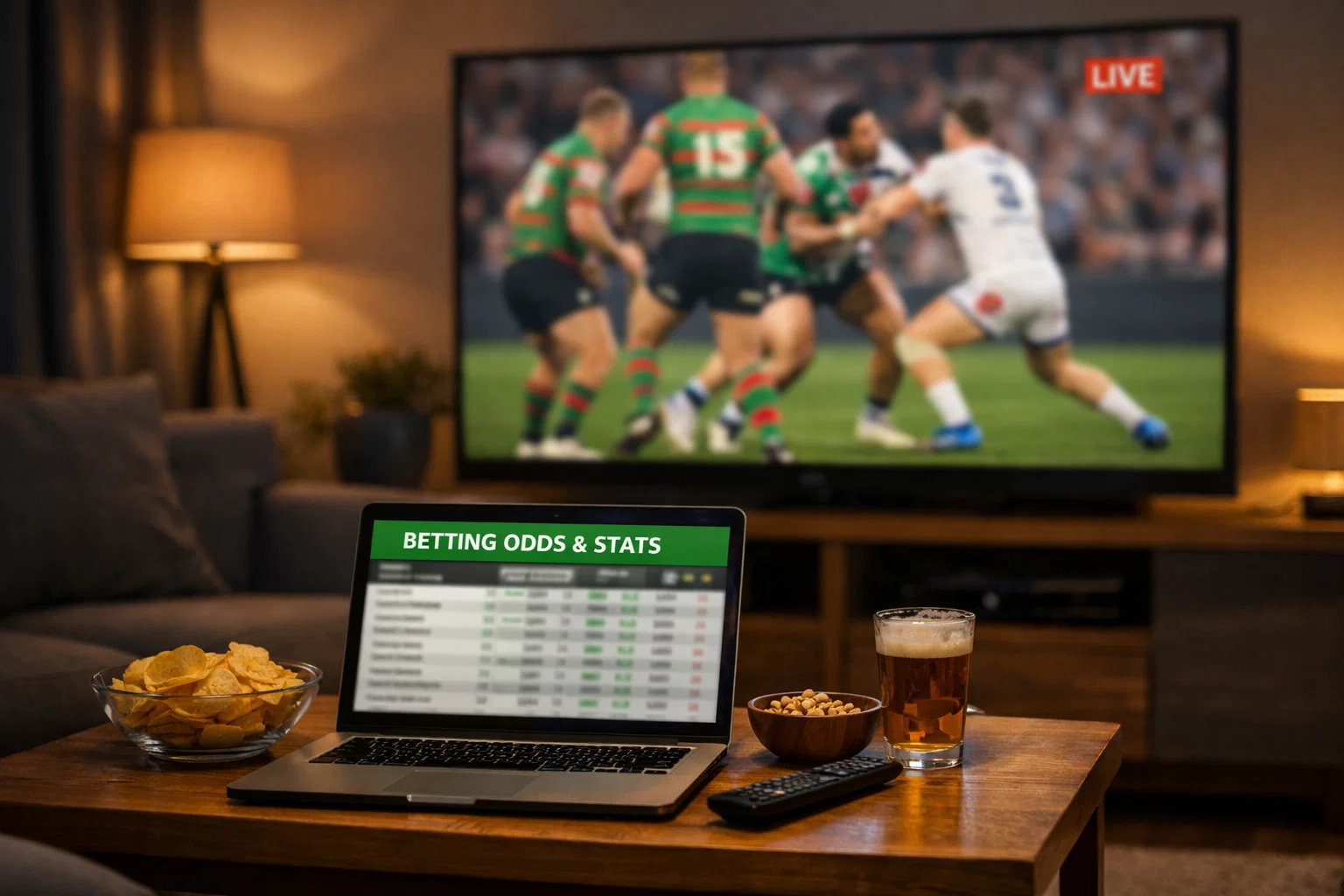
Streaming services availability varies significantly between betting platforms and competitions. Most major bookmakers offer live streaming of NRL matches to customers with funded accounts, providing the visual information necessary for informed live betting. Super League streaming availability is patchier, with some operators offering comprehensive coverage while others provide none. Accessing reliable streams ensures you can observe the game details that inform betting decisions rather than relying solely on statistical feeds that miss crucial contextual information. Building a setup that guarantees stream access for matches you intend to bet live on should be a priority.
Speed advantages in live betting favor those with faster information access. Broadcasting delays mean that stadium attendees and those with premium low-latency feeds see events before typical streaming viewers. This delay, often three to ten seconds, allows faster observers to bet on outcomes essentially already determined. If you are watching on a standard delayed stream, you are at a systematic disadvantage against faster operators during rapidly developing situations. Recognizing this limitation suggests focusing your live betting on slower-developing situations where seconds of delay matter less rather than trying to compete on immediate reactions to scoring plays.
Mobile betting platforms provide convenience but often sacrifice speed and functionality compared to desktop alternatives. Processing live bets through mobile interfaces typically takes longer than desktop versions, which matters during fast-moving situations where odds change rapidly. Screen size limitations can also prevent simultaneous viewing of multiple markets that desktop setups facilitate. Many successful live bettors maintain desktop setups at home for serious live betting while using mobile platforms only for casual observation or situations where slight delays do not matter. Understanding the trade-offs between mobile convenience and desktop capability helps optimize your technical approach.
Multiple screen setups enhance live betting effectiveness by allowing simultaneous viewing of matches and betting interfaces. Watching the game on one screen while monitoring odds movements and placing bets on another eliminates the friction of switching between applications. This setup also enables watching multiple matches simultaneously during busy weekends when several attractive live betting opportunities might develop concurrently. The investment in adequate screens and computing power pays dividends through improved reaction times and more comprehensive market monitoring during active betting sessions.
Managing Risk in Live Betting

Bankroll protection during live betting requires even more discipline than pre-match wagering because the constant action tempts overexposure. The availability of betting opportunities throughout eighty-minute matches can lead to cumulative stake sizes far exceeding what prudent bankroll management suggests. Setting firm session limits before matches begin prevents getting caught up in the excitement and over-betting situations that seemed attractive in the moment. Many successful live bettors establish per-match betting budgets that cap their maximum exposure regardless of how many opportunities they perceive during play.
Emotional control determines whether live betting enhances or destroys overall betting results. The real-time nature of live wagering creates emotional intensity that pre-match betting lacks. Watching a bet fail in real time, or seeing profits evaporate through late developments, triggers emotional responses that cloud subsequent decision-making. Anger from recent losses leads to revenge betting at inflated stakes. Euphoria from wins creates overconfidence that breeds careless subsequent bets. Developing emotional equilibrium during live betting requires conscious effort and often benefits from deliberate breaks when emotional responses threaten to override rational analysis.
When to use cash-out depends on your assessment of current value versus remaining uncertainty. Cash-out makes sense when you have locked in a position that no longer represents good value at current prices, allowing you to exit with profit rather than riding out variance you would not have originally accepted. Cash-out also makes sense when new information during matches changes your assessment of likely outcomes, allowing you to cut exposure based on updated analysis rather than original positioning. However, systematically cashing out winning positions surrenders edge over time because the bookmaker margin built into cash-out offers favors the operator. Strategic cash-out targets specific situations rather than becoming a reflexive response to any profitable position.
Chasing losses during live betting compounds initial mistakes into catastrophic sessions. When early bets fail, the temptation to increase stakes on subsequent opportunities to recover losses quickly overwhelms rational analysis. This chasing behavior almost always leads to deeper losses because the bets are driven by desired outcomes rather than genuine value identification. Accepting that some matches will produce losses and that recovery happens over extended periods rather than single sessions prevents the spiral of chasing that ruins many live bettors. Walking away from matches where early bets have failed, rather than desperately seeking recovery opportunities, protects long-term bankroll health.
Live betting amplifies both the opportunities and dangers of rugby league wagering. The strategies outlined here provide frameworks for capturing the opportunities while managing the dangers, but consistent application requires discipline that many bettors lack. Those who master emotional control, bankroll management, and game reading can find genuine edges in live markets. Those who approach live betting as entertainment rather than strategic endeavor will almost certainly contribute to bookmaker profits over time. Honest self-assessment about which category you fall into should guide your engagement with live rugby league betting.
Responsible gambling principles matter even more in live betting than pre-match wagering because the constant action creates more opportunities for harmful patterns to develop. Set strict time and money limits before engaging with live markets, and adhere to them regardless of session results. If you find live betting negatively affecting your wellbeing, your relationships, or your finances, step back immediately and seek appropriate support. The strategies discussed can improve results for disciplined bettors, but no approach eliminates the inherent risk of loss. Maintaining perspective about betting’s proper place in your life matters far more than any analytical edge. Live rugby league on rugby league betting tips.
