
First Try Scorer Betting Tips: Pick Winners in Rugby League Markets

 Available in US
Try scorer betting occupies a unique position in rugby league wagering, combining the analytical depth of form study with the undeniable thrill of watching your selected player race toward the try line. Unlike match winner or handicap betting where team-level factors dominate, try scorer markets force you to think about individual players, their roles within team structures, and the specific matchups that create scoring opportunities. This granular focus appeals to fans who follow player performances closely and believe their knowledge can translate into profitable betting.
The popularity of try scorer markets reflects their accessibility to casual bettors. Everyone understands the proposition: pick the player who scores first, and collect your winnings. This simplicity masks considerable complexity, however. The player most likely to score first is not necessarily the best betting value, since odds reflect probability assessments that often mirror public perception accurately. Finding genuine value requires understanding which players are systematically underpriced relative to their actual scoring chances, and this understanding demands deeper analysis than simply backing the competition’s leading try scorer.
Try scorer betting also offers variety that head-to-head markets cannot match. Every match features thirty-four potential selections across both teams, each with different odds reflecting different probability assessments. This market depth means opportunities exist even when the match winner market appears efficiently priced. A game between evenly matched teams might offer no head-to-head value, yet individual try scorer prices could contain significant mispricings based on how teams attack and where their scoring opportunities typically emerge.
This guide will teach you how to approach try scorer betting strategically rather than simply picking your favorite player and hoping. You will learn how different market types work, which positional factors influence try scoring, and how to identify the value opportunities that recreational bettors consistently miss. Whether you focus on NRL or Super League markets, these principles will sharpen your try scorer selections.
Understanding Try Scorer Markets

First try scorer betting asks you to identify which player will score the opening try of a match, with all other players losing regardless of their subsequent scoring. This market carries the highest odds among try scorer options because you must predict not just that a player scores but that they score before anyone else. The randomness inherent in determining which specific attacking movement produces the first try makes this market extremely volatile. Even the most prolific try scorer in the competition might go weeks without scoring first simply because teammates happened to finish the opening attacking opportunities.
The mechanics of first try scorer betting include important rules about player participation. If your selected player does not take the field, most bookmakers void the bet and return your stake. However, if your player starts the match but gets injured before any try is scored, the bet typically stands and loses if someone else scores first. These rules vary between operators, so checking specific terms before betting matters. Some bookmakers offer “first try scorer insurance” promotions that refund losing stakes if your player scores second or third, which can significantly improve the market’s expected value during promotional periods.
Anytime try scorer markets ask only that your selected player scores at some point during the match, removing the additional uncertainty of scoring sequence. This market offers lower odds than first try scorer but substantially higher win rates for strong selections. A winger who averages a try every second match might be priced around 2.50 for anytime try scorer, reflecting roughly forty percent implied probability. The same player might be 12.00 for first try scorer, reflecting around eight percent implied probability. Understanding this odds relationship helps you choose between market types based on your confidence level and risk tolerance.
Last try scorer betting mirrors first try scorer in structure but often produces different value patterns. The final try of a match frequently comes from defensive players who intercept passes or chase kicks as tired attacking teams make errors. This dynamic means that outside backs who dominate first and anytime try scorer markets may offer poor value for last try scorer, while defensive fullbacks and alert wingers become more attractive. The last try scorer market also tends to be less liquid than first try scorer, meaning odds can vary more significantly between bookmakers and value opportunities may persist longer.
Multiple try scorer markets let you back players to score two or more tries in a single match, offering substantial odds that reflect the difficulty of this outcome. Even the most prolific scorers rarely bag multiple tries, making this market essentially high-risk gambling rather than strategic betting for most matches. However, specific situations can create genuine value: when elite try scorers face porous defenses in mismatched fixtures, their chances of multiple scores exceed what the odds imply. These situations arise infrequently but reward bettors who recognize them and act accordingly.
Player Positions and Try Scoring
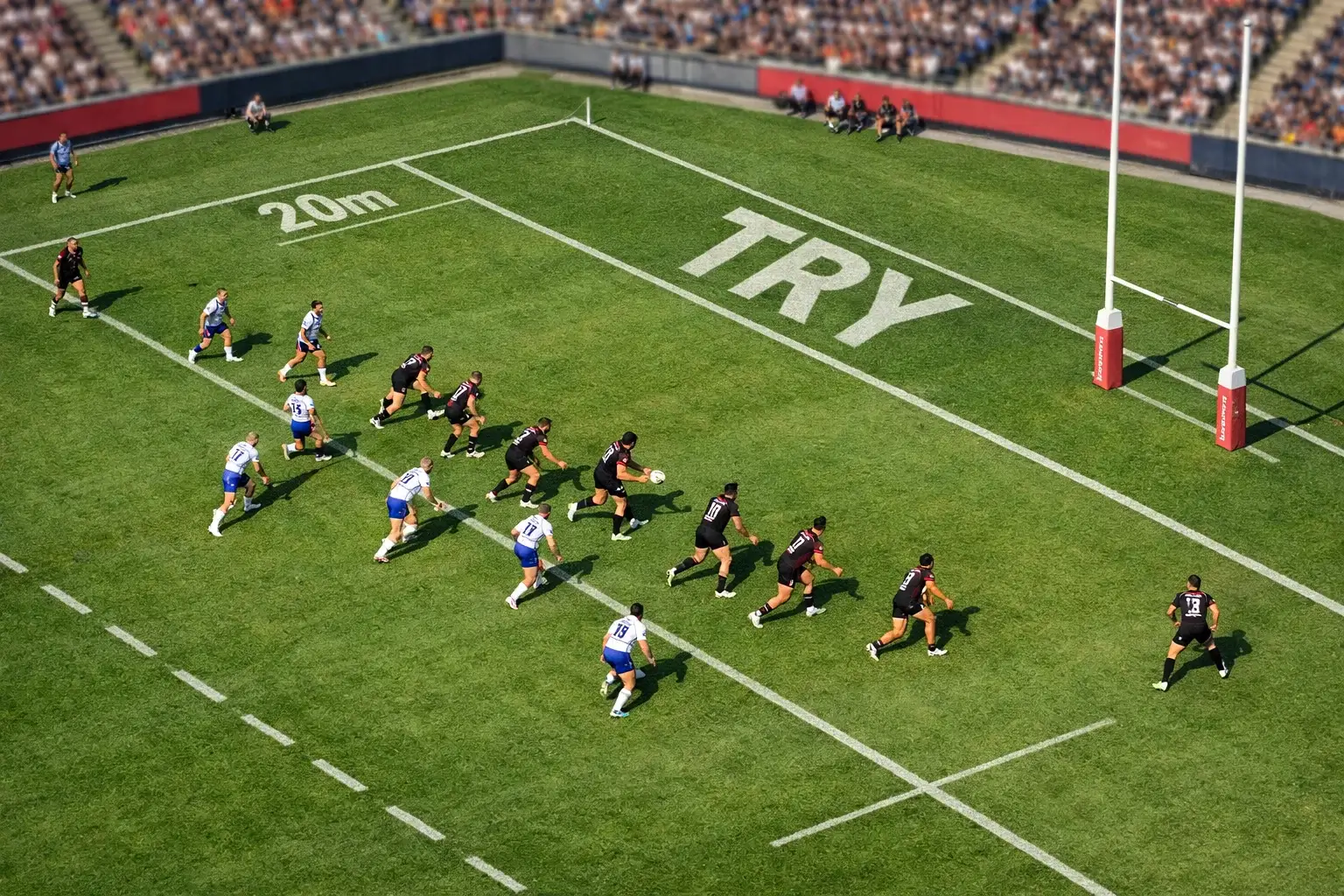
Wingers dominate try scoring statistics in rugby league because the sport’s fundamental attacking structure funnels opportunities toward the edges. When teams complete their sets of six tackles, the typical pattern involves working the ball through the middle before shifting to the edges for the final tackle where fullbacks and wingers receive the ball with space to attack. This structural reality means wingers face fewer defenders with more room to operate than any other position. A quality winger on a strong attacking team might score twenty-five or more tries across a season, far exceeding any other position’s typical output.
The try-scoring frequency of wingers makes them natural first try scorer candidates, but their odds reflect this reality. Bookmakers know that wingers score disproportionately, so their prices tend to be shorter than other positions, often making them poor value despite high probability. The sharpest try scorer bettors look for situations where specific wingers are underpriced relative to their actual chances: perhaps a winger returning from injury whose market has not fully adjusted, or one facing a particularly weak defensive edge that should produce extra opportunities. Simply backing the winger with the most tries this season rarely produces value because the market has already incorporated that information.
Fullbacks occupy the second most productive try-scoring position due to their involvement in attacking plays across the entire field. Modern fullbacks function as extra playmakers who join the line at unpredictable points, creating overlaps that produce try-scoring chances. A fullback running a support line behind a line break often finds themselves finishing tries that the initial ball carrier created. This positional involvement means quality fullbacks like those at elite NRL clubs consistently rank among try-scoring leaders despite not occupying traditional finishing positions. Their prices reflect this productivity, but specific game situations can still create value.
Centres provide try-scoring opportunities at lower odds than wingers and fullbacks, offering potential value when matchups favor inside backs over edge players. When teams face defensive structures that shut down edge play effectively, centres who receive the ball in traffic can exploit holes through the middle. Centres also benefit from set plays designed to create mismatches, where decoy runners draw defenders and open channels for the centre to attack. Tracking which teams use their centres prominently in attacking structures helps identify when centre try scorer bets offer genuine value rather than simply longer odds that reflect lower probability.
Forward try scoring offers the most intriguing value opportunities in try scorer markets because bookmakers systematically underestimate how frequently certain forwards score. Prop forwards and second rowers who play close to the try line on attacking sets often crash over from short range, yet their odds typically range from 15.00 to 25.00 compared to 8.00 to 12.00 for wingers. Lock forwards who play in the middle and support line breaks also score more frequently than their odds suggest. The market assumes forwards rarely score because historically that was true, but modern rugby league uses forwards more dynamically in attack, creating systematic mispricing that sharp bettors can exploit.
Analyzing Player Form for Try Scorer Bets
Recent try-scoring records provide the most obvious starting point for try scorer analysis, but interpreting these records requires nuance. A player who has scored in three consecutive matches might seem like an obvious selection, but those tries might have come against weak defenses or through fortunate circumstances unlikely to repeat. Conversely, a prolific scorer experiencing a three-match drought might actually offer better value because the market has overreacted to the recent blank streak. Understanding whether recent performance reflects sustainable form or random variance separates sophisticated analysis from simply chasing recent results.
Team attacking plays determine individual try-scoring opportunities more than individual player quality in many situations. When teams design set plays that target specific positions, those players receive enhanced chances regardless of their underlying ability. A team might run twelve attacking sets per match specifically designed to create opportunities for their left winger, while their right winger receives half as many designed touches. This structural difference means the left winger scores more frequently not because of superior ability but because of how the team chooses to attack. Tracking which players receive the most designed opportunities reveals value that pure try-scoring statistics obscure.
Favorable matchups create try-scoring opportunities that average statistics cannot capture. When a fast winger faces a slow opposite number, their try-scoring probability increases substantially for that specific match regardless of season-long averages. Similarly, when a powerful centre faces a lightweight defensive pairing, their chances of barging through improve. Identifying these matchup advantages requires studying upcoming opponents’ defensive personnel and understanding where their vulnerabilities lie. A player priced at 10.00 based on their season average might actually deserve 6.00 odds given the specific defensive weakness they will exploit this week.
Injury status affects try-scoring probability in ways the market sometimes fails to fully incorporate. Players returning from soft tissue injuries may have limited explosiveness that reduces their finishing ability even if they are cleared to play. Conversely, players who have recovered from minor knocks and rested while teammates accumulated fatigue might be freshest when it matters most. Understanding the nature of injuries and their likely performance impacts helps identify when returning players offer value and when their prices should actually be longer than the market suggests.
Team form influences individual try scoring through effects that extend beyond obvious win-loss records. Teams on winning streaks typically attack with confidence that creates more try-scoring opportunities for all players. Teams struggling for form often play conservatively, limiting the attacking chances that produce tries. A quality winger on a struggling team might offer poor try scorer value despite individual talent because his team simply does not create enough chances. Conversely, average players on high-functioning attacks can offer value because the team’s overall quality generates opportunities that compensate for individual limitations.
Team News Impact on Try Scorers
Late scratching effects ripple through try scorer markets in ways that create both danger and opportunity. When a team’s primary try scorer withdraws close to kickoff, the market scrambles to adjust. Their replacement’s odds shorten dramatically, often overshooting fair value as bettors rush to the obvious alternative. Meanwhile, other players who might benefit from the changed attacking dynamic see their odds remain static because the market focuses exclusively on the direct replacement. Understanding how late withdrawals redistribute try-scoring probability across multiple players helps identify value that the obvious replacement often does not offer.
Positional changes within teams significantly affect try-scoring probability by altering how attacking opportunities flow. When a fullback shifts to wing due to injury elsewhere, that wing position now receives touches from a player with different running lines and support play habits. The new fullback might be less involved in attacking plays than the original, reducing try-scoring chances across multiple positions. These ripple effects from positional shuffles create market inefficiencies because bookmakers adjust the directly affected position while related positions retain prices based on the original team structure.
Debutant opportunities create fascinating try scorer situations that reward attentive bettors. Players making their first-grade debuts often receive designed plays to settle their nerves and build confidence, particularly when debuting for their junior club. Coaches know that early involvement helps debutants relax into matches, and try-scoring set plays offer the perfect vehicle. Tracking when players debut and understanding which coaches prioritize debutant involvement can identify try scorer value at lengthy odds. The player nobody has heard of making his debut might actually offer better value than established stars if the team has designed plays to welcome him to the top level.
Opposition defensive personnel changes affect attacking players’ try-scoring chances without directly involving those attackers. When a team loses their best defensive centre to injury, their opponent’s backs facing that edge become more attractive try scorer selections. When an elite defensive fullback gets rested, kicks into the backfield that would normally be defused become try-scoring opportunities for chasers. Monitoring both teams’ injury lists rather than just the team whose player you are backing reveals these indirect value opportunities that focusing solely on the attacking side misses.
Representative football periods create complex try scorer implications that the market handles imperfectly. When State of Origin or international fixtures remove players from NRL clubs, try-scoring opportunities redistribute among remaining squad members. A player who normally receives limited attacking touches might suddenly become a primary option with teammates away on representative duty. The market adjusts for absent star players but often fails to adequately reprice the beneficiaries who inherit enhanced roles. These periods offer fertile ground for try scorer value on players suddenly promoted within their team’s attacking hierarchy.
Odds Value in Try Scorer Markets

Finding overlooked players requires understanding how bookmakers construct try scorer markets. Opening prices typically reflect a combination of historical try-scoring rates, positional averages, and team attacking metrics. These opening prices then adjust based on betting activity, with popular players seeing their odds shorten while ignored players retain their opening prices. This dynamic means players who escape public attention often remain overpriced throughout the week. Second-choice wingers, utility backs filling in due to injury, and forwards with sneakily productive try-scoring records frequently offer better value than the obvious selections everyone backs.
Forward value picks represent the most consistent source of try scorer value because market perception lags behind reality. The stereotypical view of forwards as ball carriers who rarely score persists despite modern attacking systems involving forwards far more dynamically. Lock forwards who support line breaks, prop forwards who work close to the line on attacking sets, and second rowers with deceptive footwork all score more frequently than their odds suggest. Prices of 20.00 or longer for forwards who average a try every four matches represent significant value compared to wingers at 8.00 who average a try every two matches. The expected value calculation often favors the forward despite lower raw probability.
Price movement interpretation helps determine optimal betting timing in try scorer markets. Early-week prices reflect bookmaker modeling without significant betting activity, making them most likely to contain errors. As the week progresses, sharp money corrects obvious mispricings while recreational money on popular players shortens their odds unnecessarily. The ideal time to bet try scorers is early enough to capture modeling errors but late enough to have relevant team news. Thursday or Friday betting typically hits this sweet spot for weekend matches, though significant late mail can create additional opportunities closer to kickoff.
Comparing odds across bookmakers matters more for try scorer betting than most markets because pricing varies significantly between operators. Different bookmakers model try scorer probability using different methodologies, and the low-liquidity nature of these markets means corrections happen slowly. A player might be 15.00 at one bookmaker and 20.00 at another for the same match, representing a substantial value difference. Maintaining accounts at multiple operators and checking all available prices before committing ensures you always take the best number available. The bettor consistently taking 15.00 when 20.00 was available elsewhere leaves significant edge on the table over time.
Promotional offers on try scorer markets can shift expected value dramatically when utilized properly. Bookmakers frequently offer enhanced odds on specific players, refunds if your player scores but not first, or bonus bets for try scorer wagers. These promotions effectively reduce the bookmaker margin or even eliminate it entirely in some cases. Tracking available promotions and targeting your try scorer betting toward promotional opportunities improves overall results even without superior player selection. The sharpest try scorer bettors combine analytical edge with promotional optimization to maximize their expected value from this market.
See also the first try scorer guide.
NRL vs Super League Try Patterns

Scoring trends between the NRL and Super League create different try scorer dynamics that bettors must understand when transitioning between competitions. NRL matches average more tries than Super League fixtures, with typical games producing eight to ten tries compared to around five in British competition. This higher scoring means NRL try scorer bets convert more frequently in aggregate, though odds adjust to reflect this reality. The practical implication is that NRL try scorer betting involves higher turnover with more frequent small wins, while Super League try scorer betting involves lower frequency but potentially larger returns when successful.
Key players to follow differ between competitions based on playing styles and team structures. NRL try scoring concentrates heavily among elite fullbacks and wingers at top teams, with several players regularly exceeding twenty tries per season. Super League distributes scoring more evenly across positions, with fewer dominant individual scorers but more consistent production from second-tier try scorers. Understanding these distribution patterns helps calibrate expectations and identify where value exists. Backing NRL superstars often means taking short odds on genuinely high-probability outcomes, while Super League offers more opportunities to find value on less heralded players.
Competition differences extend to how teams attack and where try-scoring opportunities emerge. NRL attacking structures emphasize speed and athleticism, creating tries through line breaks and support play that favor outside backs with pace. Super League attacks tend toward more structured play with tries coming from set pieces and close-range forward drives more frequently than in Australia. These stylistic differences mean different player types offer value in each competition. Speed-based outside backs might represent optimal NRL selections while powerful finishers and forwards offer better Super League value.
The officiating differences between competitions affect try-scoring patterns in subtle ways. Video referee interpretations, advantage application, and obstruction rulings all differ between the NRL and Super League, influencing how tries are scored and disallowed. Bettors experienced in one competition who transition to the other should study these officiating tendencies to understand how they affect try-scoring probability. A try that would be awarded in the NRL might be disallowed in Super League or vice versa, and these systematic differences affect certain player types and try-scoring methods more than others.
Building Try Scorer Multis
Combining try scorer bets into multi-bet accumulators offers substantial potential returns but requires understanding the mathematics that govern these wagers. Each leg you add multiplies both potential returns and the probability of total loss. A four-leg try scorer multi at average odds of 10.00 per leg offers theoretical returns of 10,000 for a single unit stake, but the probability of all four legs winning is approximately one in ten thousand. These long odds mean try scorer multis lose far more often than they win, making bankroll management crucial for anyone who includes them in their betting approach.
Risk management for try scorer multis means treating them as entertainment rather than core betting strategy. The variance inherent in requiring multiple independent outcomes to all succeed makes try scorer multis negative expected value propositions under most circumstances. Sharp bettors who build genuine edges through careful analysis typically avoid multis entirely because they dilute edge across multiple legs while compounding probability against you. If you enjoy try scorer multis, allocate a small portion of your betting bankroll specifically for this purpose and accept that long-term losses are likely regardless of your selection quality.
Optimal leg count for try scorer multis depends on your goals and risk tolerance. Two-leg multis offer modest return enhancement while maintaining reasonable win probability. Three-leg multis push into territory where wins become genuinely infrequent but not impossibly rare. Beyond three legs, you enter lottery territory where wins are rare enough that expected losses accumulate rapidly. Most bettors who include try scorer multis in their approach find the sweet spot around two to three legs, where returns feel meaningful when successful without the probability becoming so low that years pass between wins.
Correlation between legs affects try scorer multi construction because same-game selections are not independent events. If you back two players from the same team to score, only one can score first, meaning their first try scorer probabilities are negatively correlated. However, for anytime try scorer multis, teammates can both score in the same match, creating positive correlation in high-scoring games. Understanding these correlations helps construct multis that avoid obvious conflicts while potentially benefiting from game situations that enhance multiple legs simultaneously.
Advanced Try Scorer Strategies

Watching team play styles reveals try-scoring patterns that statistics alone cannot capture. Some teams run specific set plays targeting certain positions multiple times per match, while others distribute attacking opportunities more evenly. Identifying these tendencies through match viewing, rather than just statistical analysis, reveals which players receive enhanced chances that the market may not fully price. A team might have a signature move that produces tries for their left centre at higher rates than his overall statistics suggest, but this pattern only becomes apparent through watching how they attack rather than studying aggregated numbers.
Set piece patterns near the try line create predictable try-scoring distributions that attentive bettors can exploit. When teams have attacking scrums or penalties inside the twenty, they often default to practiced plays that involve specific players. Tracking which players benefit from these close-range set pieces reveals value opportunities, particularly for forwards who crash over from dummy-half runs or centres who receive short passes from structured plays. These set piece tries often go to players with modest overall statistics but high conversion rates in specific situations.
Last-minute intelligence gathering can provide edges that earlier analysis missed. Team warm-ups reveal which players are moving freely versus those who might be carrying knocks. Social media and team-affiliated media sometimes leak lineup changes or tactical adjustments before official announcements. Weather conditions at the venue might differ from forecasts, affecting which players benefit. The bettor who checks all available information sources in the final hour before kickoff occasionally gains advantages that justify adjusting or adding to earlier positions.
Try scorer betting rewards those who combine systematic analysis with genuine rugby league understanding. The strategies in this guide provide frameworks for that analysis, but consistent application and continuous learning determine long-term results. The market is not perfectly efficient, but it is efficient enough that casual approaches produce consistent losses. Finding edges requires work that most recreational bettors are unwilling to invest, which is precisely why those edges persist for those who do the work. First try scorer tips on rugby league betting tips.
Responsible gambling matters as much in try scorer betting as any other market, perhaps more given the lottery-like nature of first try scorer odds. The excitement of long-odds winners can create unhealthy patterns of chasing similar results through escalating stakes. Set strict limits on try scorer betting exposure and treat wins as pleasant surprises rather than expected outcomes. If you find yourself increasing stakes to chase previous highs, step back and reassess your relationship with this market. The entertainment value of try scorer betting should never compromise your financial wellbeing or personal relationships.
