
Super League Grand Final Betting: Strategies and Market Analysis
 Available in US
The Super League Grand Final is the single biggest match in English rugby league, played at Old Trafford in Manchester in front of a sold-out crowd and broadcast to a national audience. It is also one of the most fascinating betting events in the rugby league calendar, because the factors that determine its outcome differ from those that govern regular-season matches. Playoff form overrides regular-season consistency, big-game temperament separates contenders from pretenders, and the unique neutral-venue setting strips away the home advantages that shaped the regular season.
If you have spent the season betting on weekly Super League fixtures, the Grand Final requires a recalibration. The teams that reach Old Trafford have survived several weeks of eliminators, and the filters that got them there tell you as much about their betting profile as anything in the preceding 27 rounds.
The Road to Old Trafford: Why Playoff Form Matters Most
The Super League playoffs are structured to reward the highest-finishing regular-season teams with advantages: the top two receive a first-week bye, and higher seeds get home advantage in the early rounds. By the time two teams reach the Grand Final, each has navigated a specific path through the playoffs, and those paths create very different physical and psychological conditions.
A team that finished first or second and received a bye in Week 1 of the playoffs arrives at Old Trafford with one fewer game in its legs. That sounds marginal, but in a competition where the playoffs compress three or four matches into a month, the cumulative fatigue on a squad is significant. The team with the bye has had an extra week to recover from injury niggles, fine-tune its game plan, and mentally prepare for the occasion. In betting terms, this rest advantage is worth attention, particularly when the Grand Final line is tight.
Conversely, a team that came through the elimination rounds, winning two or three sudden-death matches to reach the final, arrives with a different kind of energy. These teams have been tested under the highest pressure and survived. Their combinations have been forged in adversity, and they often display a cohesion and desperation that rested teams struggle to match. The question for the bettor is whether the fatigue cost exceeds the battle-hardening benefit, and the answer varies each year depending on the specific squads involved.
Examining each team’s playoff results in detail is essential. A team that won its semi-final by 30 points against a weak opponent tells you less than a team that won by 2 against a quality side. Margin of victory in the playoffs reveals defensive intensity and composure under pressure, both of which are critical at Old Trafford. Teams that have been in close playoff matches and found a way to win are psychologically better prepared for the Grand Final’s unique tension.
Old Trafford: The Neutral Venue Factor
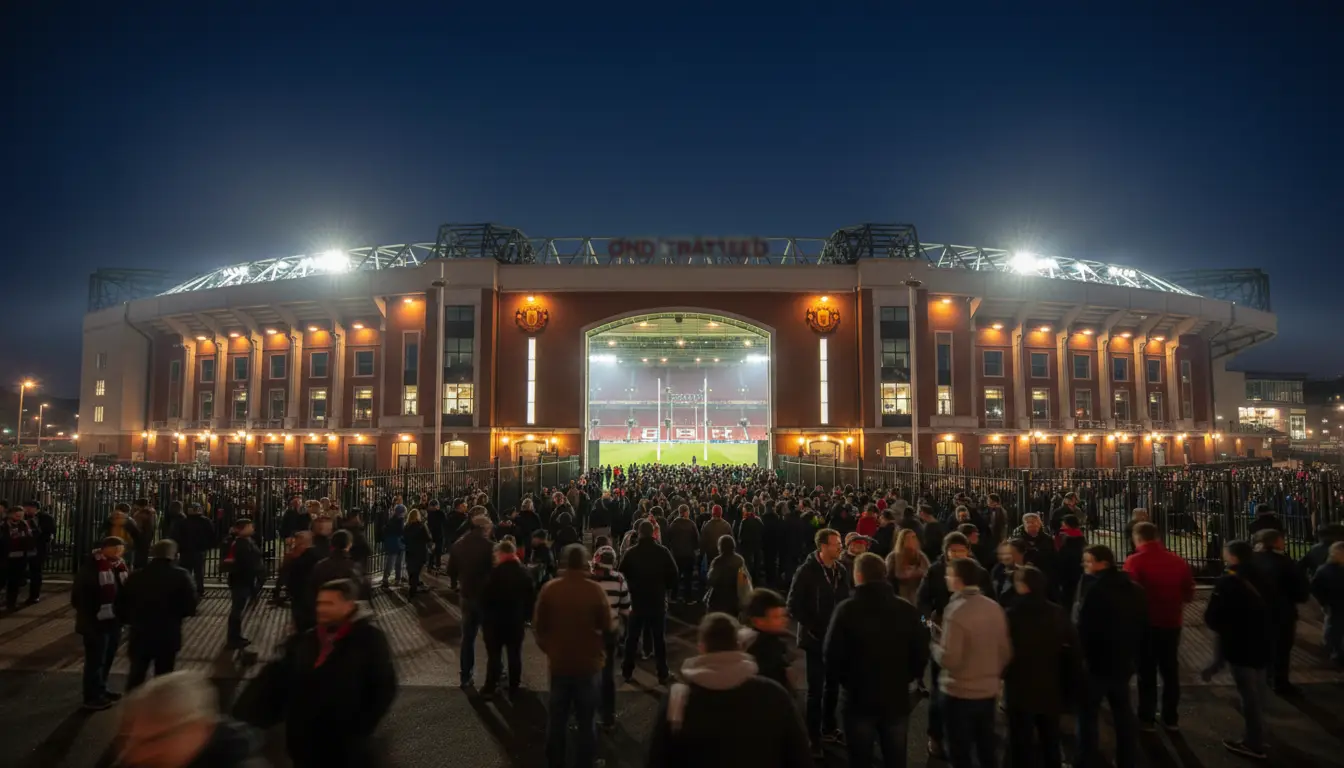
Old Trafford is a football ground repurposed for one night of rugby league each year. It holds approximately 74,000 fans and provides a spectacle unlike any regular-season venue. For bettors, the critical point is that this is a genuinely neutral venue. Neither team has played there during the regular season, neither has a crowd advantage, and neither has the familiarity with the dimensions and surface that a home ground provides.
This neutrality equalises teams that may have had dramatically different home-away splits during the season. A team that dominated at its own ground but struggled on the road cannot rely on that home edge at Old Trafford. Meanwhile, a team that performed consistently well away from home, demonstrating an ability to win in unfamiliar environments, may actually hold a subtle psychological advantage in the Grand Final setting.
The surface itself is a variable. Old Trafford’s pitch is maintained for football, and by October it has endured a full Premier League season plus concerts and other events. The surface can be heavy, particularly if autumn rain has set in, and a slow pitch favours forward-dominated teams over those that rely on speed and agility out wide. Checking the weather forecast for Manchester in the days leading up to the Grand Final is a simple step that can tilt your market selection toward unders in totals and toward the team with the heavier forward pack if conditions are wet.
Historical Grand Final Trends Worth Knowing
The Super League Grand Final has been played at Old Trafford since 1998, and the accumulated history offers bettors a useful lens. A handful of patterns recur with enough frequency to influence market selection, even though no trend is guaranteed to continue.
First, the Grand Final has been dominated by a small group of clubs. St Helens, Wigan Warriors, and Leeds Rhinos account for the majority of Grand Final appearances and victories in the modern era. When one of these clubs reaches the final, their experience of the occasion is a tangible advantage. Players and coaching staff who have been through the unique build-up, the media pressure, and the Old Trafford environment before are less likely to be overwhelmed by it. First-time finalists, by contrast, often start slowly and concede early field position while adjusting to the atmosphere. This pattern supports a slight lean toward the more experienced Grand Final side, particularly in first-half or first-try markets.
Second, Grand Finals tend to be tight. The average winning margin across the Super League Grand Final history is narrower than the regular-season average, reflecting the quality of the teams involved and the cautious, high-stakes nature of the occasion. This has direct implications for the handicap market: large lines in Grand Finals are historically unreliable, and bettors should approach any Grand Final handicap of -8.5 or wider with scepticism. The margin market, specifically the 1-12 bracket, has been the most frequently correct outcome range.
Third, try-scoring tends to be suppressed compared to regular-season fixtures. Grand Finals are intense defensive battles, and the first try often does not come until well into the first half. Under bets on total tries, particularly under 8.5 or 9.5, have delivered solid returns across the competition’s history. The total points line also tends to come in under rather than over. If the bookmaker sets the total at 40.5, history suggests the under is the statistically stronger position unless both teams are genuinely elite attacking outfits.
See also NRL Grand Final.
Market-by-Market Breakdown for Grand Final Night
The match winner market is the headline bet, but it is also the market most likely to be efficiently priced. Bookmakers devote significant resources to the Grand Final, and the head-to-head odds generally reflect the true probabilities closely. Value is harder to find here than in regular-season matches.
The handicap market is where opportunities emerge. Because Grand Finals are close, the handicap line is usually tight, often between -2.5 and -6.5. If your analysis suggests the teams are more evenly matched than the line implies, the underdog plus the start can be a strong position. Conversely, if you believe one team’s forward pack will physically dominate the other, taking the favourite on the line is defensible if the number is small. The key is avoiding large lines that imply blowouts, which Grand Finals rarely produce.
First try scorer is particularly interesting on Grand Final night. The cautious early phases of a Grand Final mean the first try often comes from a set-piece move close to the line rather than open-field brilliance. Centres and back-rowers who run hard lines off the ruck are over-represented in Grand Final first-try data. Wingers, who dominate regular-season first-try stats, tend to be less prominent because the attacking width is constrained by heightened defensive effort. Adjusting your first try scorer selections toward middle-and-edge players near the ruck can improve your strike rate in this specific fixture.
Player performance props in the Grand Final follow the same patterns as Origin: defensive workloads increase, running metres can be suppressed by intense line speed, and tackle count overs for middle forwards become attractive. A lock forward in a Grand Final is virtually guaranteed to exceed his regular-season tackle average because the defensive intensity lifts every player’s workload. If the bookmaker’s line is set off season numbers rather than accounting for the Grand Final premium, the over is the correct play.
Timing Your Grand Final Bets
The Grand Final market opens as soon as the competing teams are confirmed, usually a week before the match. Early prices are more volatile because they are set quickly and adjusted as money flows in. If you have a strong pre-formed view on the likely finalists based on your season-long analysis, you can even back a team in the outright futures market before the Grand Final pairing is confirmed, collecting a longer price that accounts for the uncertainty of them reaching the final at all.
During Grand Final week, watch for late injury news and team sheet confirmation. Super League coaches sometimes name extended squads early in the week and trim to the final seventeen on match day. A late withdrawal of a key forward or playmaker can shift the handicap line by two or three points. Bettors who monitor these announcements and act quickly can lock in favourable prices before the broader market reacts.
Live betting during the Grand Final is available but should be approached with particular caution. The match’s intensity means momentum swings are sharper and more unpredictable than in regular-season games. A team trailing by 6 at half-time in a Grand Final is far more likely to mount a comeback than a team in the same position during Round 14, because the stakes compress every player’s effort to maximum. In-play odds may not fully account for this heightened comeback probability, making the trailing side an interesting live bet if the deficit is modest. Super League Grand Final on rugby league betting tips.
One Night, One Chance, One Bet
The Super League Grand Final distils an entire season into eighty minutes at Old Trafford. It favours the experienced, the defensively sound, and the physically imposing. It punishes teams that rely on home advantage, expansive attacking play, and the margins of the regular-season schedule. For bettors, the Grand Final is a puzzle that requires setting aside weekly habits and adopting a framework tailored to the occasion. Tight margins, defensive effort, and the weight of history at a neutral venue are the variables that matter most. Bet accordingly, and let the season-long work pay off in the only match that everyone remembers.
