
State of Origin Betting Tips: How to Wager on Rugby League's Biggest Rivalry
 Available in US
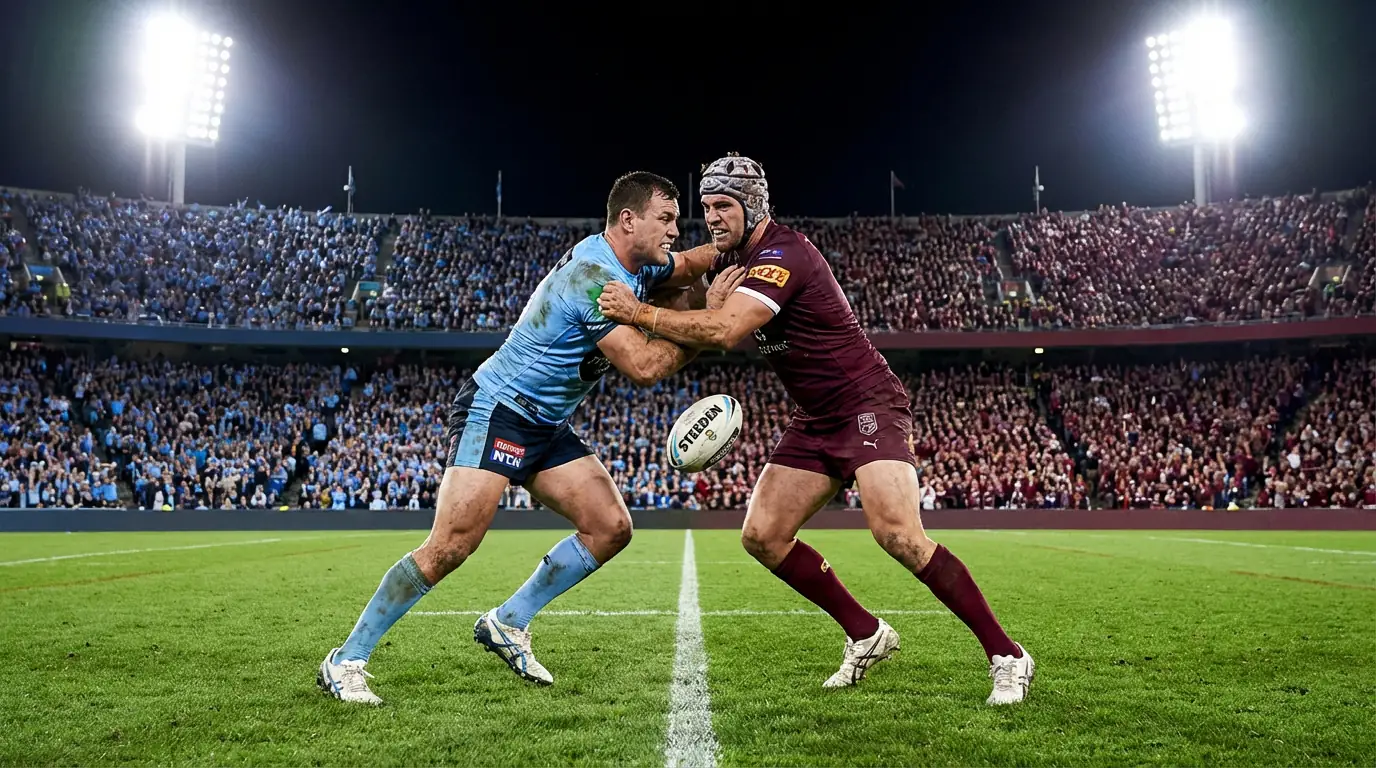
State of Origin is not just the highlight of the rugby league calendar. It is the fixture that stops Australia. New South Wales versus Queensland, three games across June and July, played with an intensity that makes the NRL regular season look like a training run. Players who have been teammates for years at club level try to remove each other from the contest within the first ten minutes. It is brutal, emotional, and utterly compelling.
For bettors, Origin presents unique challenges and opportunities. The matches are standalone events with no form guide in the traditional sense. Squads are announced days before kick-off, players combine in unfamiliar partnerships, and the psychological dimension of the rivalry overwhelms conventional statistical analysis. Betting on Origin requires a different mindset, and those who treat it like a regular NRL round tend to get burned.
What Makes Origin Different From Club Football
The most important distinction is intensity. NRL regular-season matches are contested hard, but players manage their bodies across a 27-round season. In Origin, there is no pacing. Every tackle is hit at maximum force, every carry is taken at full speed, and the defensive line pressure on the ball carrier is significantly higher than anything seen in club football. This creates a game that is faster, more physical, and more error-prone simultaneously.
The result on the scoreboard reflects this. Origin matches historically average fewer points than regular NRL games because defences are so ferocious. Tries are harder to come by, field position becomes paramount, and penalty goals and field goals carry enormous weight. If you are accustomed to NRL totals averaging 40-plus points per game, Origin will regularly come in below that threshold.
Squad composition adds another layer of unpredictability. Unlike club football, where combinations build over months, Origin teams are assembled from scratch each series. A halves pairing that has never played together at club level must develop an understanding in two training sessions. A forward pack drawn from four or five different NRL clubs must coordinate its defensive line and interchange rotation without the benefit of shared muscle memory. Some combinations click immediately. Others take a full game, or an entire series, to gel.
Match Winner Strategies: Picking Sides in a Rivalry
Betting on the match winner in Origin requires looking beyond team talent sheets. Both squads will have elite players; that is the nature of representative selection. The differentiator is cohesion, coaching, and which team handles the occasion better.
Recent series history matters more than individual player form. If Queensland have won the last two series, the psychological advantage tilts their way, and NSW shoulder the burden of expectation. Conversely, a team that lost the previous series often comes out with a desperate energy in Game 1 that can override any talent gap. Motivation in Origin is not a vague intangible; it is a measurable factor that shapes the first twenty minutes of every match.
Home-ground advantage in Origin is significant and sometimes underpriced. Game 1 and Game 3 rotate between Sydney and Brisbane (with occasional fixtures in other cities like Melbourne, Adelaide, or Perth), and the home team’s record across the modern Origin era is notably strong. When a game is played in Brisbane, Queensland’s win rate climbs substantially. The Suncorp Stadium crowd creates an atmosphere that genuinely affects the contest, lifting the home side and rattling the visitors. Bettors should always note the venue before engaging with the match winner market.
See also our NRL betting strategy.
Margin Betting: The Market Built for Origin
If any rugby league market was designed for State of Origin, it is winning margin. Because Origin matches tend to be close, the margin market offers attractive odds on tight results. Bookmakers typically group margins into bands: 1-6 points, 7-12 points, 13-18 points, and 19 or more. The majority of Origin results across the past two decades have fallen in the 1-12 range, making those brackets the most historically productive.
The 1-6 margin bracket is particularly interesting from a value perspective. Origin matches decided by a single converted try or a penalty goal differential are common enough to warrant consistent attention, yet the odds for either team to win by this margin typically sit between $3.50 and $5.00. Over a three-game series, backing the margin bracket you believe is most likely at these prices can produce a positive return even if only one of three bets lands.
A smarter approach is to combine margin analysis with your match winner view. If you believe NSW will win but lack confidence in a dominant performance, pairing NSW 1-6 at $4.50 with NSW 7-12 at $4.00 gives you coverage across the most probable winning margins. Yes, you are outlaying two stakes, but the expected return on the likely outcomes is substantially higher than taking NSW at $1.80 on the match winner line. This kind of market construction is where Origin betting rewards thoughtful bettors over casual ones.
Player Performance Markets: Beyond the Try Line
Origin has expanded its player performance markets significantly in recent years. Beyond first try scorer and anytime try scorer, bookmakers now offer markets on individual tackle counts, running metres, try assists, and even kicking metres for halves and fullbacks. These markets thrive on the unique conditions of Origin football.
Tackle count markets are particularly appealing because they are more predictable than scoring markets. Middle forwards in Origin consistently record tackle counts well above their club averages, because the defensive workload in representative football is relentless. A lock or prop who averages 30 tackles per game at club level can be expected to make 35-plus in Origin. If the over/under line is set at 32.5 based on club-level data, the over is a strong play.
Running metres for outside backs can go either way, and that variability is what makes the market interesting. A winger who averages 120 metres per game in NRL might see his running metres drop to 80 in Origin because the defensive pressure reduces his kick-return opportunities and the ball rarely reaches his edge in general play. Alternatively, a fullback in a team that controls possession might exceed his club average because he has more clean ball to work with. Understanding each player’s role within the Origin game plan, rather than relying on NRL averages, is the key to finding edges in these markets.
Thinking in Series, Not Single Games
One of the most commonly overlooked aspects of Origin betting is the series market. Before Game 1 kicks off, you can back either team to win the series (two games to one or better) or bet on a drawn series result. The series winner market is priced based on an aggregation of individual game probabilities, and it sometimes presents better value than betting each game separately.
The reason is strategic. In a best-of-three format, the team that wins Game 1 holds an enormous psychological and tactical advantage. They can afford to experiment in Game 2, rest a player carrying a niggle, or absorb a loss without consequence. The losing team in Game 1 must win two consecutive matches against a side playing with freedom. Historical data shows the Game 1 winner goes on to win the series around 70 percent of the time in the modern era. This asymmetry means that if you have a strong view on Game 1, the series winner market may offer a better risk-reward profile than the individual match.
Betting the series also insulates you from single-game variance. An intercept try in the 78th minute can turn a dominant Game 2 performance into a loss, but if your team still takes the series, the individual-game disappointment becomes irrelevant. For bettors who prefer to make fewer, more considered wagers, the series market is the most elegant way to engage with Origin.
Where the Jersey Meets the Spreadsheet
State of Origin resists the spreadsheet more than any other rugby league fixture. The emotional weight of the jersey, the ferocity of the contest, and the unique team dynamics make pure data-driven models less reliable than they are for regular-season NRL. But that does not mean analysis is useless. It means the right analysis looks different. Venue, series context, squad cohesion, and defensive intensity matter more than raw talent. Margin markets and player props offer better structural edges than the match winner. And thinking in series rather than single matches aligns your betting with how Origin actually unfolds. The rivalry rewards bettors who respect its uniqueness rather than trying to flatten it into a standard NRL framework. State of Origin tips on rugby league betting tips.
