
First Try Scorer Betting in NRL: Strategy, Stats and Best Picks
 Available in US
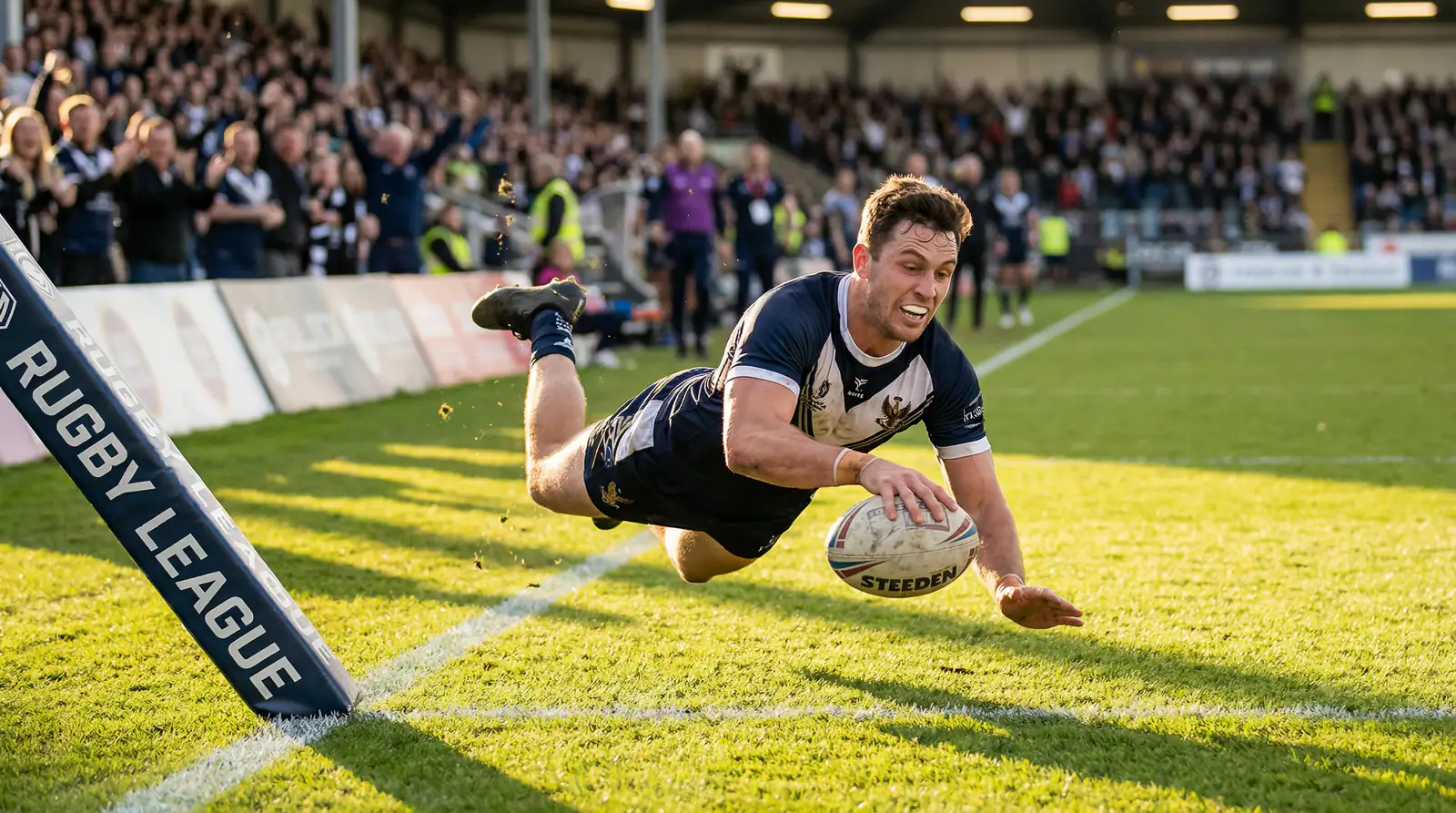
There is something deeply satisfying about calling the first try scorer in an NRL match. The game is barely two minutes old, a winger takes a short ball on the flank, dives over in the corner, and your bet is already settled while everyone else waits eighty minutes for their results. Of course, there is also the version where your pick gets subbed off at halftime without touching the ball in the opposition’s twenty. That is the first try scorer market in a nutshell: high reward, high variance, and endlessly debatable.
This market is one of the most popular in NRL betting, and for good reason. Odds are generous, the research is enjoyable, and a disciplined approach can turn what looks like a lottery into something surprisingly methodical.
How the First Try Scorer Market Works
The rules are straightforward. You select the player you believe will score the first try of the match. If your player crosses the line first and the try is awarded by the referee (or confirmed by the video referee), you win. If someone else scores first, you lose. If no try is scored in the match, which is extraordinarily rare in NRL, most bookmakers void the bet and return stakes.
Penalty tries add a wrinkle. Most Australian sportsbooks do not count a penalty try as a first try for the purposes of this market because no individual player is credited with the score. If a penalty try opens the scoring, the market rolls forward to the next actual try. Always check your bookmaker’s specific rules on this, because some offshore operators handle it differently.
Prices in this market vary enormously. A prolific winger might sit at $8.00 to $10.00, while a prop forward could drift out to $41.00 or beyond. The odds reflect a blend of historical try-scoring frequency, positional likelihood, and public betting patterns. Bookmakers know that punters love to back recognisable names, which sometimes inflates the odds on less glamorous but statistically productive players.
Positional Analysis: Who Scores First Tries?
Not all positions are created equal when it comes to opening the scoring. If you study NRL data across multiple seasons, a consistent pattern emerges. Centres and wingers account for the largest share of first tries, followed by fullbacks and then edge back-rowers. Halves and hookers chip in occasionally, while middle forwards are, unsurprisingly, the rarest first try scorers.
The reason is structural. Most NRL tries come from plays that exploit the edges of the defensive line, and those plays deliver the ball to outside backs. Set-piece moves off scrums near the try line also favour centres and wingers. A team’s typical attacking shape in the opening ten minutes of a match tells you a lot about who is likely to be on the end of an early opportunity.
Within those broad positional trends, individual roles matter. A centre who plays on the same side as the team’s dominant ball-playing half will see more touches in attacking positions. A winger whose team favours a kick-return strategy that targets his edge will have more early-set carries close to the line. These are not things you can find in a simple stats table; they come from watching games and understanding how specific teams construct their attacks.
Form, Matchups and the Stats That Matter
Recent form is the most obvious starting point, but it needs context. A winger who has scored four tries in three weeks is clearly in good touch, but if those tries came against bottom-four defences and this week he faces the competition’s best edge defence, his probability drops sharply. Raw try-scoring tallies do not capture difficulty of opposition or the nature of the tries themselves.
More useful metrics include tries per game over a rolling window of six to eight matches, the percentage of a team’s total tries scored by each player, and how often a player is involved in plays inside the opposition’s twenty-metre zone. NRL statistical providers now publish detailed touch maps and zone-based involvement data that can help isolate players who consistently find themselves in try-scoring positions rather than those who have simply been the beneficiary of a couple of broken-play flukes.
Head-to-head matchup data adds another layer. Some defenders consistently struggle against certain types of attackers. A big, powerful centre might dominate a smaller opposite number, creating repeat try-scoring opportunities on that edge. Opposition defensive records by position, such as tries conceded to left-edge wingers or right-edge centres, can reveal patterns that bookmakers sometimes underweight. This research takes time, but it is exactly the kind of work that separates informed punters from those scrolling through player names hoping for inspiration.
See also our first try scorer tips.
Finding Value: Where Bookmakers Get It Wrong
Bookmakers price first try scorer markets with a significant margin built in. When you add up the implied probabilities of every player in the market, the total will comfortably exceed 100 percent, often by 30 to 50 percent. This overround means you need to be selective rather than betting every game.
Value tends to appear in a few predictable spots. First, look at players returning from injury or suspension who may not yet have readjusted public perception. A winger coming back after missing three rounds might see his first try scorer odds pushed out because recent data points are absent, even though his underlying quality has not changed. Second, consider players whose teams have made tactical shifts during the bye week or mid-season transfers. A new halves pairing can redirect a team’s attacking focus to a different edge, boosting one winger’s prospects while diminishing another’s.
Third, and this is where a touch of irony helps, back the boring picks. Fullbacks who run hard kick-return sets and insert themselves into the line on the first or second tackle are statistically significant first try scorers, but the public gravitates toward flashier names. A fullback at $12.00 can represent far better expected value than a marquee centre at $7.00 if the underlying chance is roughly equivalent.
Timing, Team Sheets and Tuesday Odds
The timing of your bet matters. First try scorer odds are posted early in the week, often before final team sheets are confirmed on Tuesday afternoon. If a team names an unexpected starter on the wing or shifts a player into the centres, the market adjusts, but there is often a lag. Punters who follow team announcements closely and act within the first hour of confirmed line-ups can occasionally grab prices that are about to shorten.
Conversely, late mail on game day can wreck a first try scorer bet entirely. If your selected player is a late withdrawal and replaced by a bench utility, most bookmakers will void the bet. But if he starts and simply has a quiet game, that is your loss to wear. The volatility is part of the market’s charm, and part of the reason the odds are higher than in more predictable markets.
Team sheets also reveal tactical clues. When a coach names a second-rower on the bench who normally starts, it could indicate a plan to use a bigger forward pack early, slowing the game tempo and reducing opportunities for outside backs. When a specialist goal-kicking fullback is named to start, it might suggest the team expects to spend time in the opposition half, increasing try-scoring chances for the players around him. First try scorer NRL on rugby league betting tips.
The First Try Is Not a Coin Flip
First try scorer betting will always carry variance. No amount of research eliminates the randomness of a loose ball bouncing into a prop’s hands two minutes into the match. But the gap between a disciplined bettor who studies positional data, tracks team announcements, and prices their own market versus someone who picks their favourite player every week is enormous over a full NRL season. The market rewards patience, specificity, and a willingness to back the unglamorous option when the numbers say so.
